VISUAL LITERACY/PICTUREBOOKS
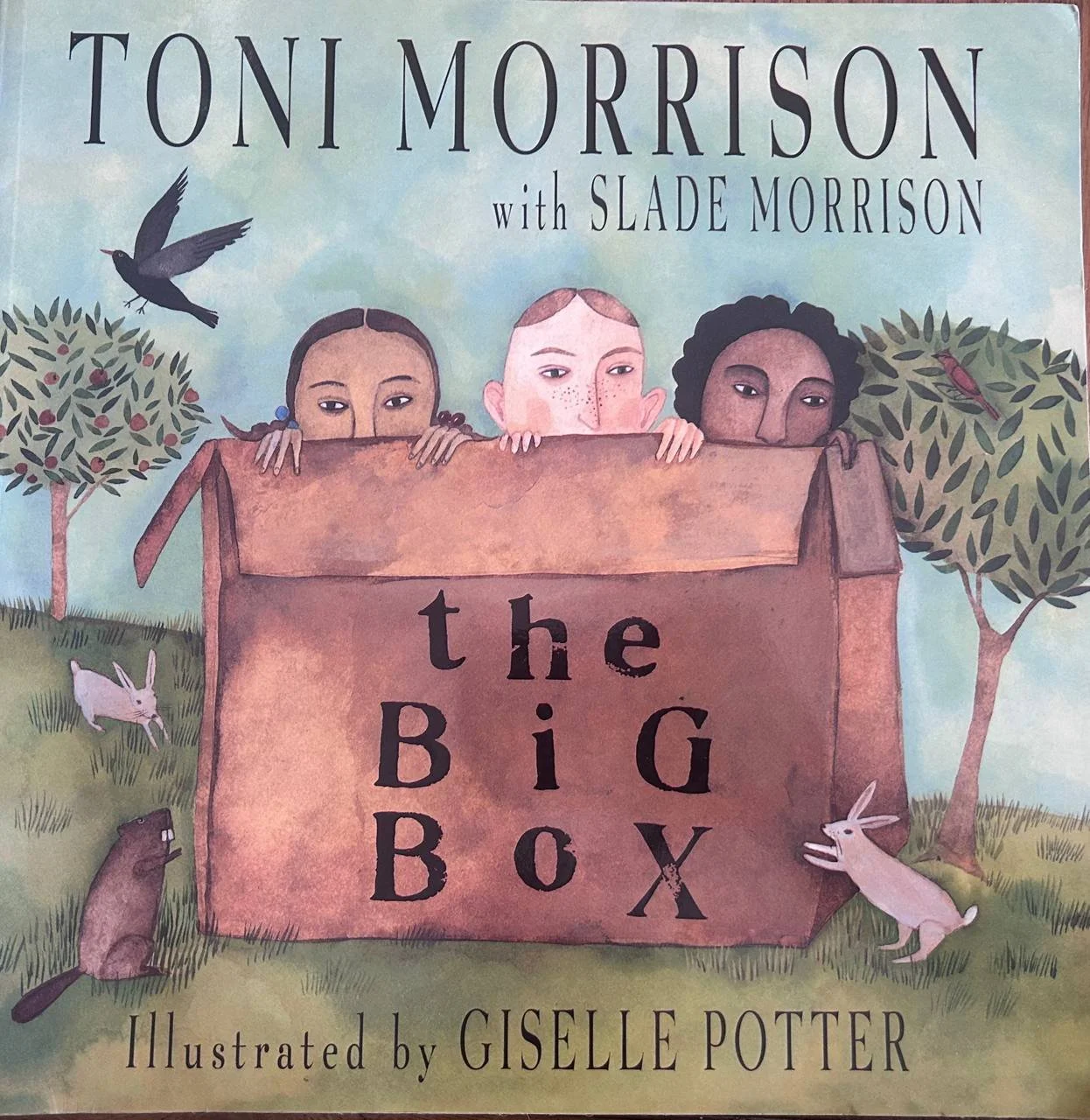
THE BIG BOX
Toni Morrison with Slade Morrison
Illustrated by Giselle Potter
A book about personal freedom and boundaries. When does protection become control? Do presents mean love? Is love all down to presents?
HYPERION BOOKS FOR CHILDREN · 1999 · AGES 7-13
01
DECODE SYMBOLS
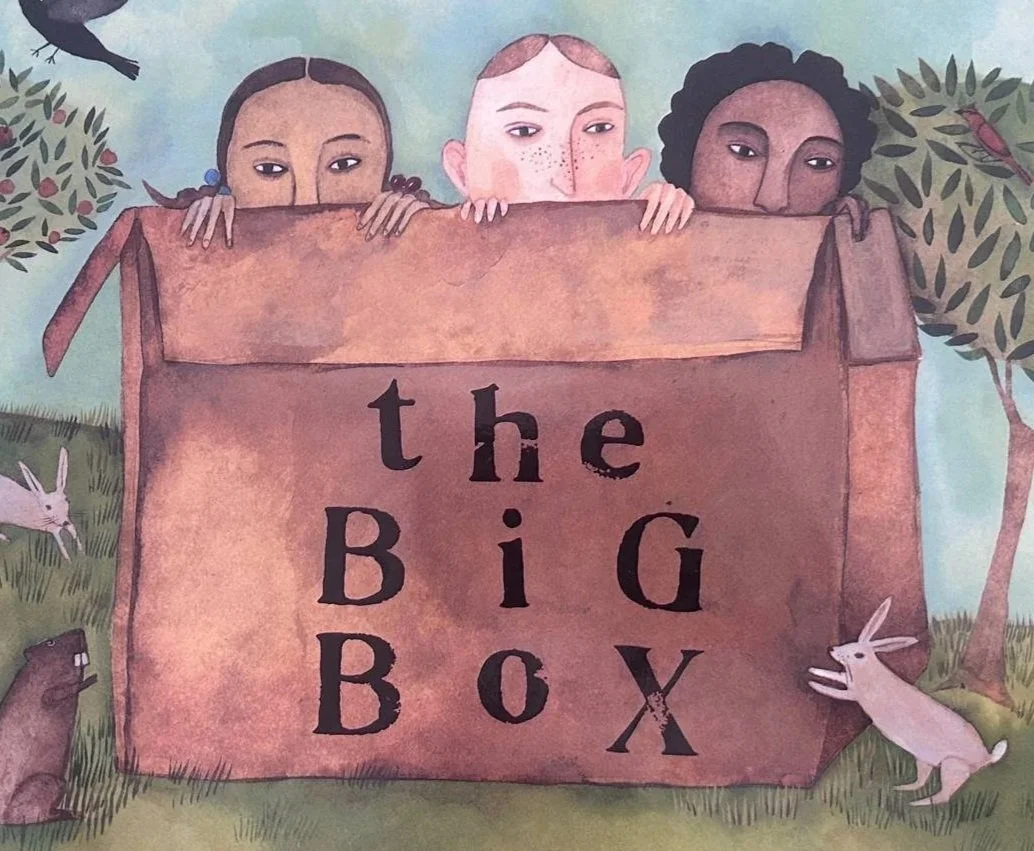
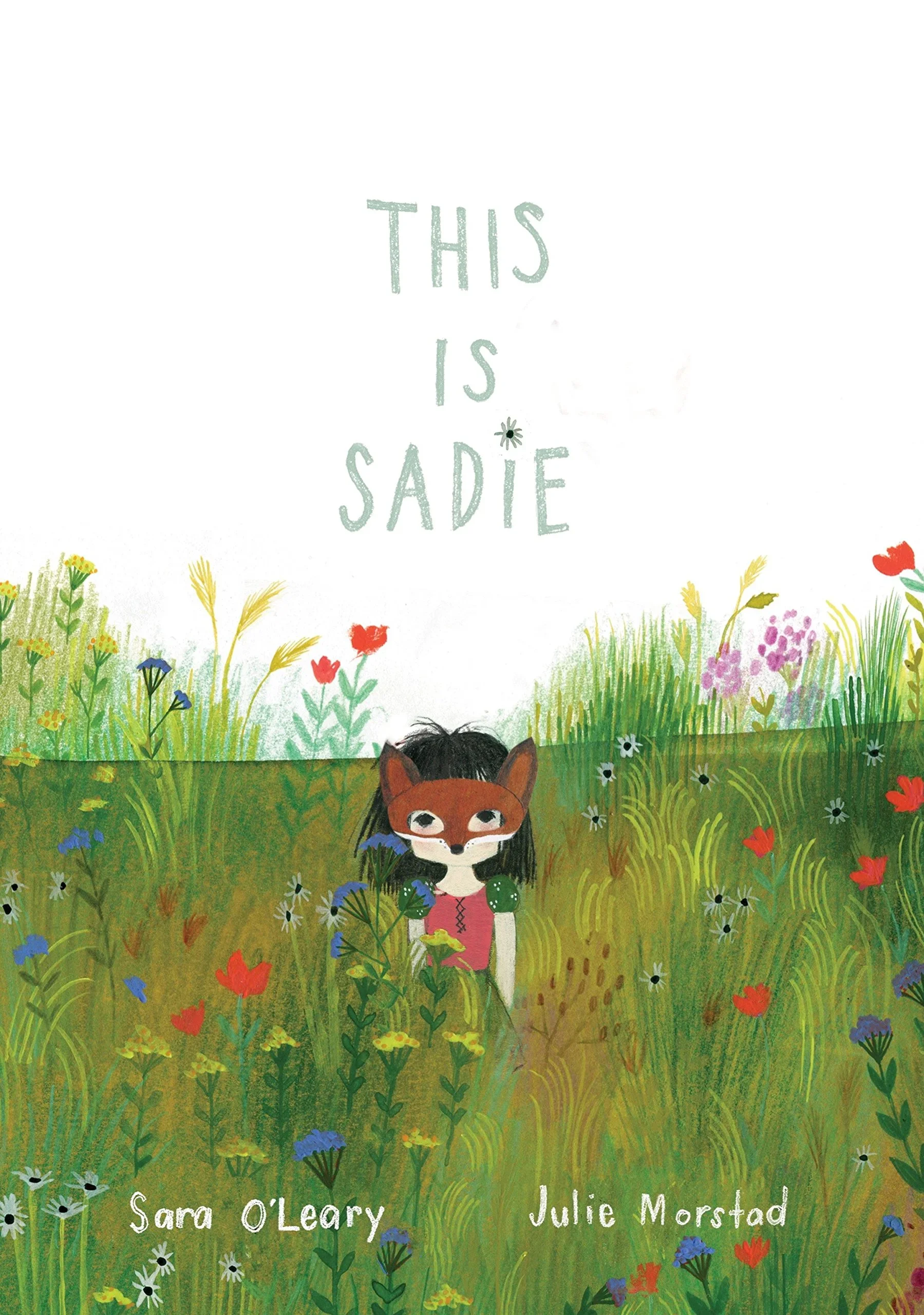
A cardboard box is normally associated with imagination and possibility. Give children an empty box and they will turn it into almost anything.
Do you remember This Is Sadie? She was rather creative with her box
02
CONTRADICTIONS
The children have almost everything associated with a happy childhood. It looks like an enormous playroom.
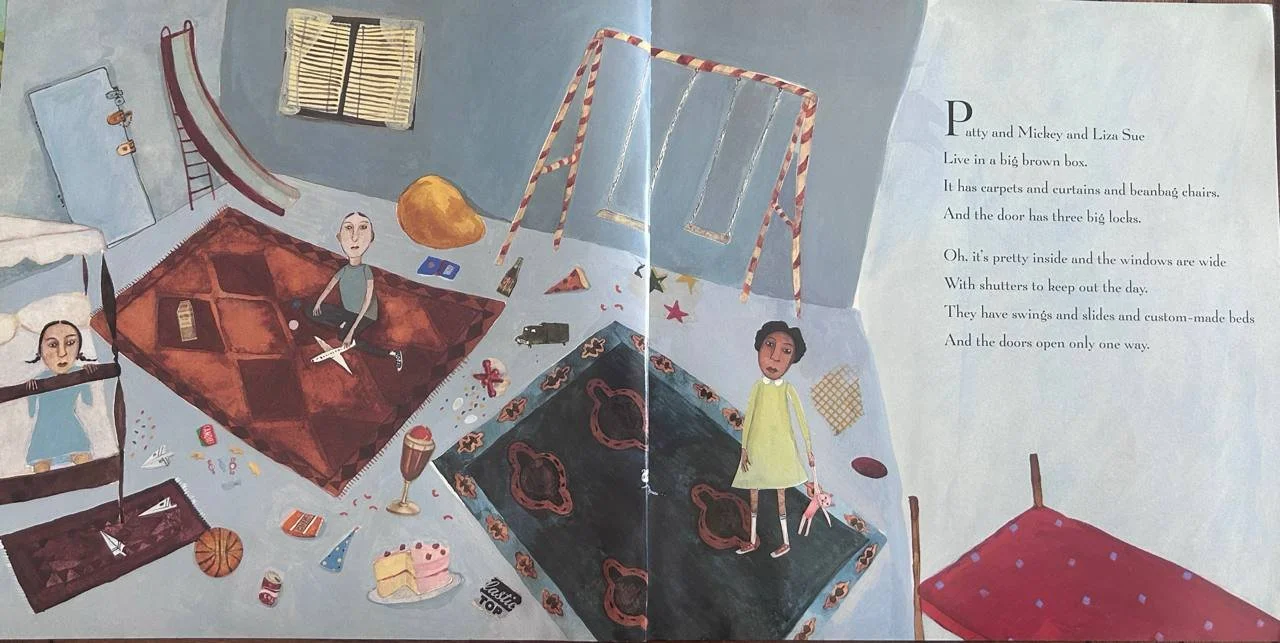
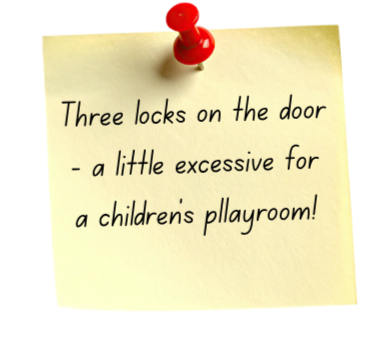
See how small details contradict the idea of a happy childhood.
03
ANALOGY
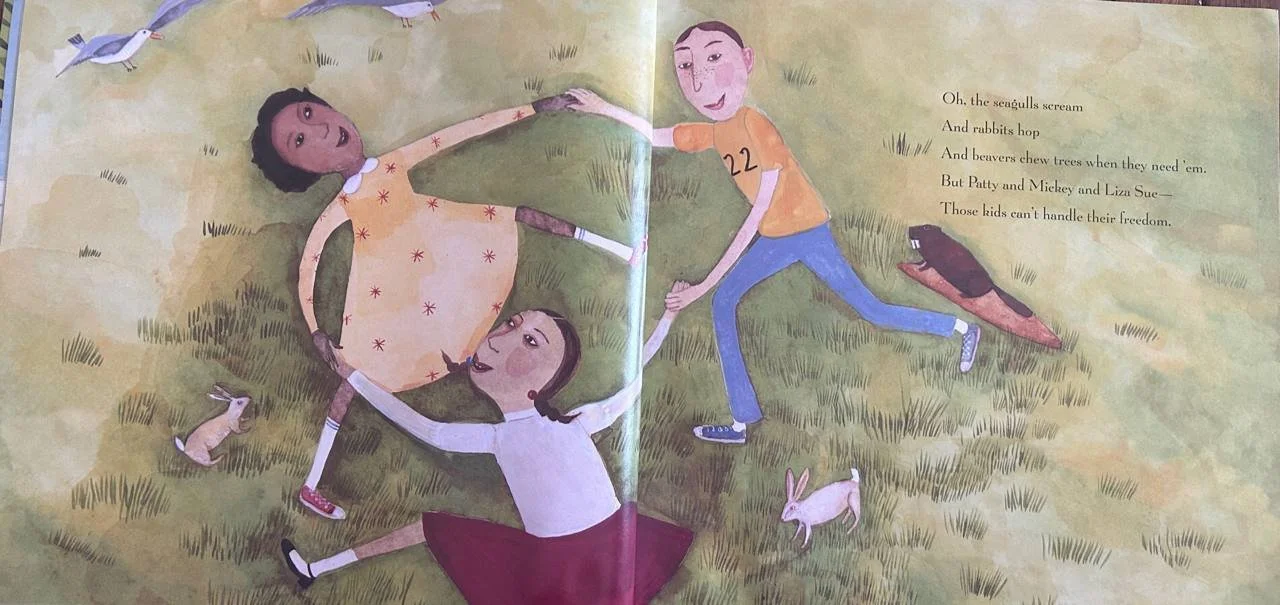
The text establishes: Seagulls scream. Rabbits hop. Beavers chew trees. Nobody questions it because it is perfectly natural. But when children behave like children - adults decide there is something wrong with them.
Can you think why this analogy is being repeated several times in the story?
04
QUESTIONABLE IDEAS
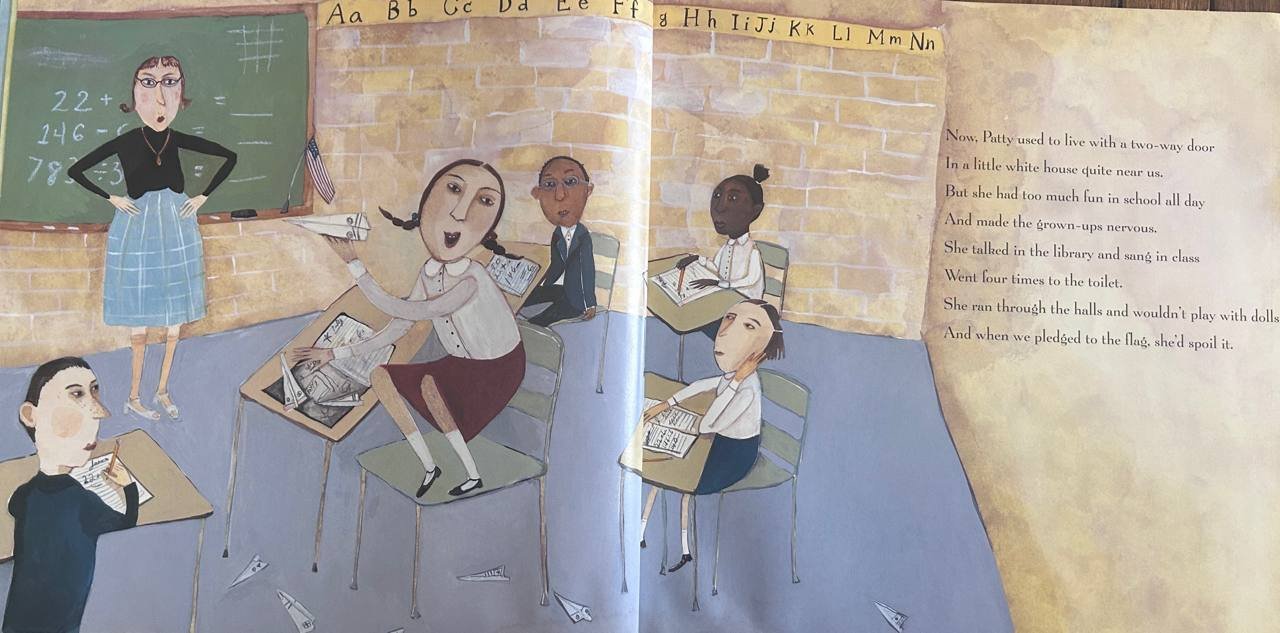
Another example of a negative/positive idea sneaking into a list of things. We do agree that spoiling the flag is unacceptable. Singing in class is also frowned upon.
Is playing with dolls a must for a well-behaved girl? Let’s talk more about stereotypes.
05
KNOW YOUR PLACE
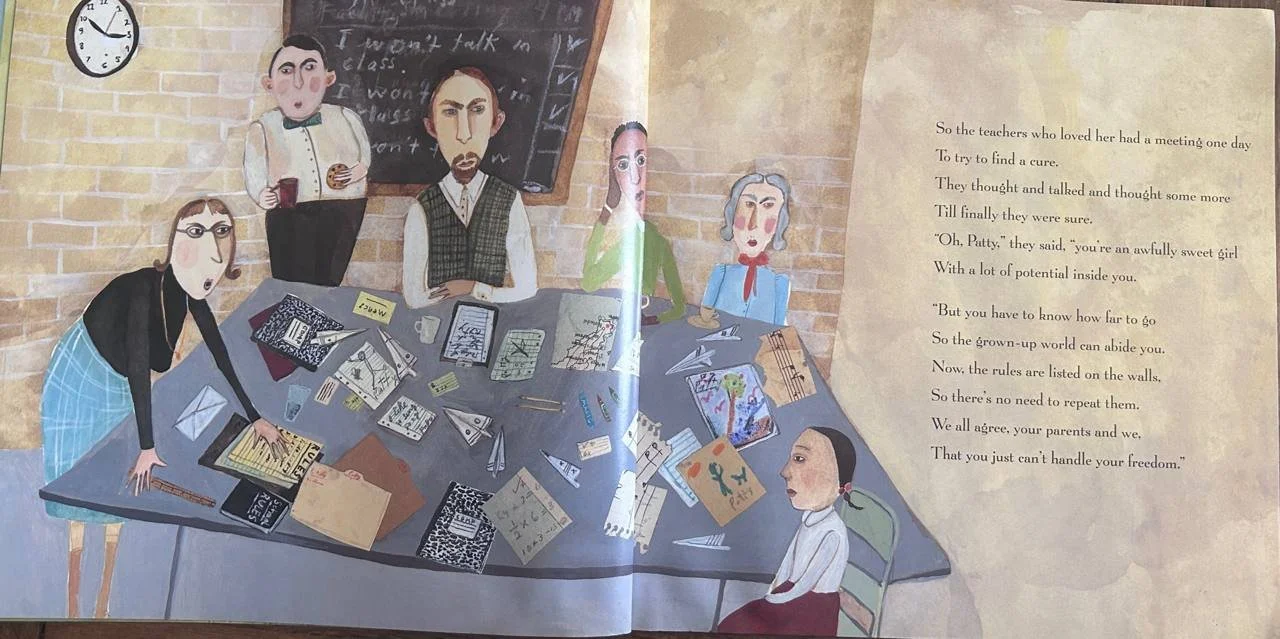
Who has the power here? She is right at the bottom of the page, squeezed between the table and the wall, while the teachers tower above her. They are not only physically above her - they have placed themselves above her mentally too.
The composition tells us about the power relationship before we even begin to analyse the words. There’s so much distance between the girl and the ‘loving adults’ who want to ‘try to find a cure’. We cure an illness or a disease. But what exactly is Patty suffering from?
READ MORE
A CLOSER LOOK AT THE BIG BOX
What if adults could give children everything they need - except freedom?
This is not an easy question. And this is not an easy book. It pretends to be a book for very young children, presented in a familiar picturebook format. But I wouldn’t read it with ks1 students as the text is too complex for their understanding.
The illustrations in this book are complementary and work together with the text as a team. They add missing pieces to each other’s work and create a bigger picture.
For example, the text doesn’t exactly point out that the kids are literally inside a box and that we are looking at them as if they were animals in a cage, hamsters in a tank, or dolls inside a doll’s house.
The text simply says that they “live in a big box.” But the box could be a metaphor for a flat or a house — or maybe even our world.
The illustrations, though, push us towards an actual box.
The words leave “box” open to interpretation; the pictures narrow that interpretation.
Morrison hides negatives among positives.
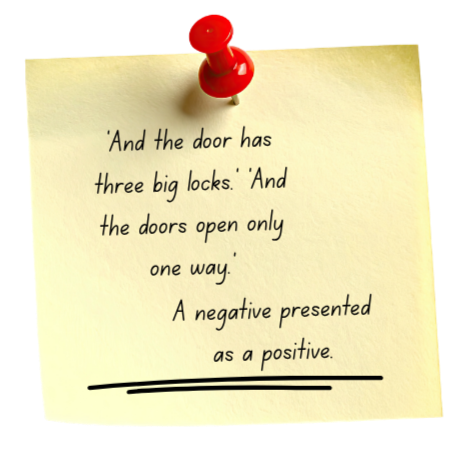
She gives us one good thing, and another, and another — and then slips something disturbing into the same grammatical structure. The little conjunction “and” makes everything sound as though it belongs together.
The grammar doesn't warn us that something has gone wrong.
For example, “they have swings and slides and custom-made beds” — all good stuff, and expensive too. It IS good, isn’t it?
But then the next line goes: “and the doors open only one way.”
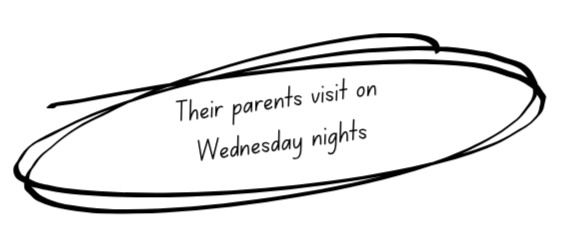
When the parents visit on Wednesday nights (so casually mentioned, as though this is totally acceptable), you should see the stuff the children get. Wow.
And then Toni does it again. She throws in all sorts of things that can be good — until you actually stop and think about them.
Pizza? Yep, kids usually love it. But is it really a good present from a loving mother?
Another fascinating thing about this book is that the way you judge what you see depends on what you encounter first: the text or the pictures.
If you look at the illustration of their Christmas presents first and spot a lovely fish tank, you might think it’s an awesome present. Then you read the text and discover that the fish is plastic.
Or vice versa.
You read the text first and approve of Mum’s choice of present. LEGO is indeed fun. Then you look at the picture — and discover that there are only four LEGO bricks.
Four.
It’s useless.
Giselle Potter does the same.
When we first see the slide, we think it’s a bit daft to even have it in the room. The ladder is pushed against the wall, so it’s impossible to use.
But the next page reassures us. No, it’s fine. It is actually usable.
Or is it?
I love the word I picked in the sentence above. ‘Usable’. Everything is just usable and not enjoyable.
Don't trust my opinion. And don't trust your first impression.
This book repeatedly says: Look again. Are you sure?
And that makes it a perfect book for the classroom. One child will be absolutely sure. Another won't be. And that's where the conversation starts.
For example, Toni tells us how badly Patty behaved.
She talked in the library. (How bad is it? What if she was whispering? Okay, that's not good anyway.)
She sang in class. (Right...)
She ran through the halls. (Health and safety, guys. We probably should discourage running through the halls.)
She wouldn't play with dolls. (She wouldn't?)
When they pledged to the flag, she'd spoil it. (Not cool. In some countries, disrespecting a national symbol can even have legal consequences.)
But why are all these things stuck together in one list of offences?
How is refusing to play with dolls equivalent to spoiling the pledge to the flag?
The grammar treats them as though they are equally bad. But are they?
That's how I read it. Someone else might disagree with me.
And that's exactly the point.
LEARNING WITH GREGORY HALL SCHOOL
WE DON’T JUST READ BOOKS.
WE LEARN HOW TO LOOK.
Our literature classes teach children to notice what others might miss - to question pictures, follow visual clues, make connections and discover how stories work.